Moving to Europe from the UK: The Paperwork
The paperwork behind a move to Europe is the thing that stops most people booking, and it is more manageable than it looks. In plain terms, three things are involved: a customs declaration on each side of the Channel, a claim for transfer-of-residence relief so you do not pay duty on your own belongings, and a detailed inventory of what you are moving. You supply a short set of documents; we handle the packing, loading and transport and work with a customs partner on the clearance.
Stranks Removals & Storage has run European removals from our Ashford depot for years, using the Channel ports at Folkestone and Dover. This guide sets out what is needed and who does what. We are removers, not customs or tax advisers, so treat this as a plain overview and confirm the current rules with the official customs authority of your destination country before you commit.
What Changed After Brexit
Since 1 January 2021, when the Brexit transition period ended, moving household goods from the UK to an EU country goes through full customs procedures, the same as any move from outside the EU (House of Commons Library). Before then, personal effects moved within the single market with almost no paperwork.
In practice this means your shipment is now declared to customs on the UK export side and again on the destination import side. It does not make a European move difficult, but it does mean you cannot arrive at the terminal with a loaded van and no forms.
The Relief That Keeps Your Move Duty-Free
Most people moving their own used belongings pay no import duty or VAT, under what is generally called transfer-of-residence relief. It is worth being clear about direction here, because it is a common point of confusion:
- Moving into the UK, you claim HMRC’s Transfer of Residence relief, the ToR1 (gov.uk).
- Moving from the UK into an EU country, you claim the equivalent relief in your destination country, administered by that country’s own customs authority.
The conditions are broadly similar across EU countries. Typically you need to have lived in the UK for around 12 months before the move, the goods need to have been owned and used by you for around six months, and the move needs to be a genuine, permanent change of residence rather than a temporary stay. The relief is not automatic: it has to be applied for, with supporting documents and an inventory. Because the exact conditions, forms and processing times vary by country, check them against the official customs authority for your destination before you rely on them.
What You Supply, and What We Handle
This is the part worth being clear on. The technical customs filing is done by a customs broker; you provide a small set of documents; we run the physical move.
You supply:
- Proof you have been living in the UK, such as utility bills, council tax or a tenancy or mortgage statement.
- Proof of your new address abroad, such as a rental agreement, purchase contract or local registration.
- Passport or ID copies for the people moving.
- A signed, detailed inventory, which we help you prepare if we are packing.
- Any licences or documents for items that travel separately, such as pets or firearms.
We handle:
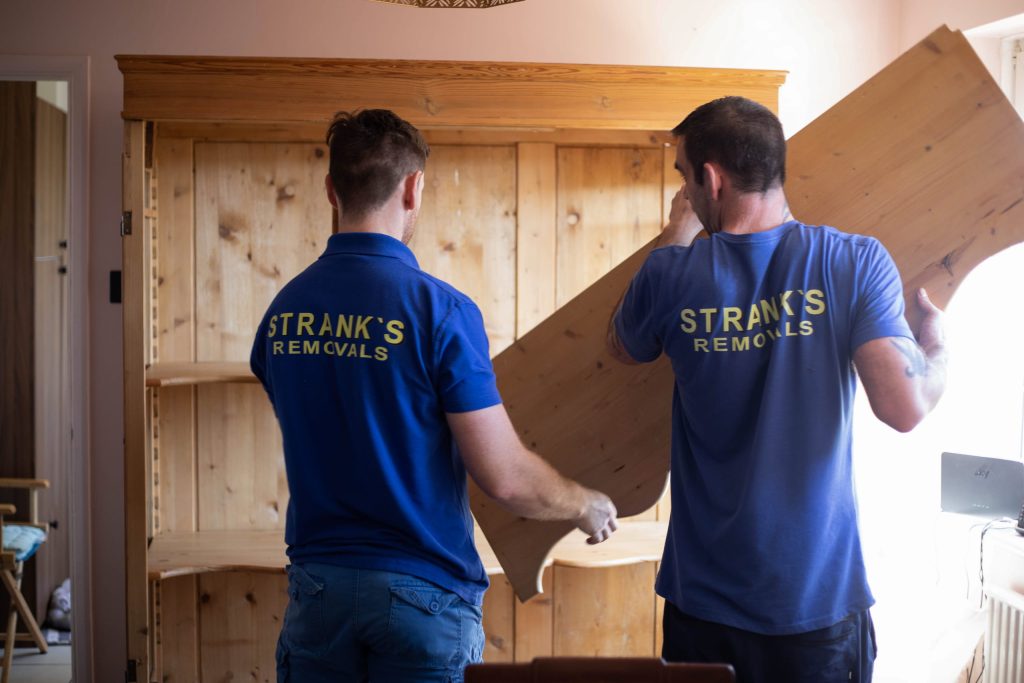
- The pre-move survey, packing, loading and transport from your UK address to your new home.
- Preparing the packing inventory when we pack for you.
- Coordinating with a customs partner for the export and destination clearance, and routing through the Channel ports.
The customs broker handles:
- The technical customs declarations on the UK export side and the destination import side, and lodging your relief claim in the destination country.
Your move coordinator confirms exactly what the broker needs from you at the survey stage, so nothing is left to the last minute.
The Inventory: Why It Matters More Than People Expect
Customs officers on both sides use the inventory to assess your shipment without opening every box, so a vague list slows everything down. “Household goods” tells them nothing; an itemised list clears faster.
A good inventory includes:
- The box number and its contents.
- An estimated value for each box or item.
- Whether anything is new or still boxed.
- Any high-value items such as jewellery, artwork, antiques or instruments, listed separately.
New items still in their packaging are generally not covered by used-goods relief and may be assessed for duty and tax as ordinary imports, so declare those separately rather than mixing them in. We prepare the inventory as part of the packing service; if you pack yourself, we give you the format to use before loading day.
Things That Travel Separately
Some items are not part of a standard household consignment and follow their own rules, which vary by destination. Pets, vehicles, firearms and controlled medicines are the common ones. Do not assume they can go on the van with everything else. Check the official guidance for your destination country well in advance, and tell us at the survey so we can plan around them.
Country by Country
The relief framework is broadly shared across the EU, but each country runs its own forms, offices and timescales, so we do not list specific form numbers here that could be out of date by the time you move. Your customs broker identifies the correct filing route for your destination. Our country guides cover the route and what a move to each looks like, for example removals to France and removals to Spain, and you can see every destination we cover on the European removals page.
A Rough Planning Timeline
This is general planning guidance, not a customs schedule, and it assumes a straightforward household move:
- As soon as your destination address is confirmed: start the relief application in your destination country and gather your proof-of-residence documents.
- Eight to twelve weeks out: book your survey and confirm what your broker needs.
- Four weeks out: agree the inventory and flag any new or restricted items.
- The week before: make sure your relief reference and document pack are ready and shared with us.
- Moving day: the driver carries the full document pack for the crossing.
Because completion dates and customs steps can slip, the single best thing you can do is start the paperwork early rather than waiting for the move date to be fixed.
Ready to Plan Your European Move?
Stranks Removals & Storage has moved families from Kent to the Continent since 1941, and the Channel ports are part of our regular routing. We are a family firm, BAR members, BS EN 12522 certified, and rated 9.7 out of 10 across 380 verified reviews.
Get a quote for your European move or call the team on 0800 0195 525.
FAQs
Yes. Since 1 January 2021, a move from the UK to an EU country goes through full customs procedures on both sides. Your belongings are declared on export from the UK and again on import to the destination country.
The split is straightforward. You supply a short set of documents: proof of UK residence, proof of your new address, passport copies and a signed inventory. We handle the packing, loading and transport, and coordinate with a customs partner. The broker does the technical customs filings and lodges your relief claim in the destination country.
Usually not. Used personal belongings generally qualify for transfer-of-residence relief in the destination country, which removes import duty and VAT if the conditions are met. New or still-boxed items are treated differently and may be assessed for duty. Confirm the exact position with your destination country's customs authority.
An incomplete document pack can hold your shipment at the border while it is sorted, and any storage during that hold is charged separately. It is the most common and most avoidable cost on a European move, which is why we send a document checklist and go through it with you before loading day.
No. Transfer-of-residence relief covers used personal effects. New items in their original packaging are generally treated as ordinary imports and assessed for duty and tax, so declare them separately on the inventory.