Moving Furniture Abroad: What to Expect
Moving furniture abroad follows a clear process, and knowing the steps takes most of the worry out of it. In short: your furniture is wrapped and protected, packed and listed on an inventory, held if your dates do not line up, loaded, and handed to a freight partner for the international leg and customs clearance. On the UK side, everything is done by our own team; the shipping and destination clearance are handled by an established freight partner we work with.
Stranks Removals & Storage runs European and international removals from our Ashford, Kent depot, close to the Channel ports. We are a family firm, trading since 1941, and full members of the British Association of Removers (BAR). This guide walks through what actually happens to your furniture between your old home and your new one.
What Makes an Overseas Move Different
A domestic move can be a single day, door to door. Moving furniture abroad adds a few things a UK move never has to deal with:
- Documentation. Every item leaving the UK is listed on an inventory, and every item arriving abroad has to satisfy that country’s import rules.
- Transit time. International shipments spend longer in transit, and the timing depends on the route and the type of load.
- Protection. Items face vibration, stacking pressure and humidity changes over a long journey, so the packing has to be far more thorough.
- Insurance. Because your belongings are out of your hands for longer, goods-in-transit cover matters more, not less.
The Process, Step by Step
This is the service as we actually run it, in order.
1. Survey and quote
We assess the volume, the access at your UK address, and any specialist items, in person or by video call. This is where a realistic timeline and an accurate quote come from. Estimating a move without seeing it leads to the wrong-sized vehicle on the day.
2. Wrapping and protection
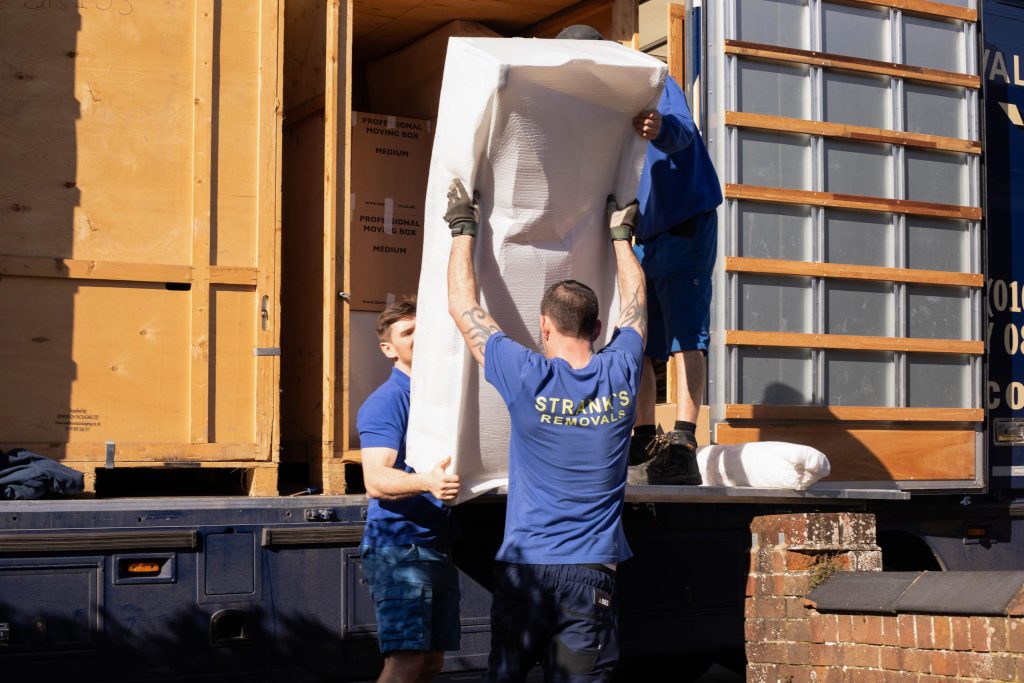
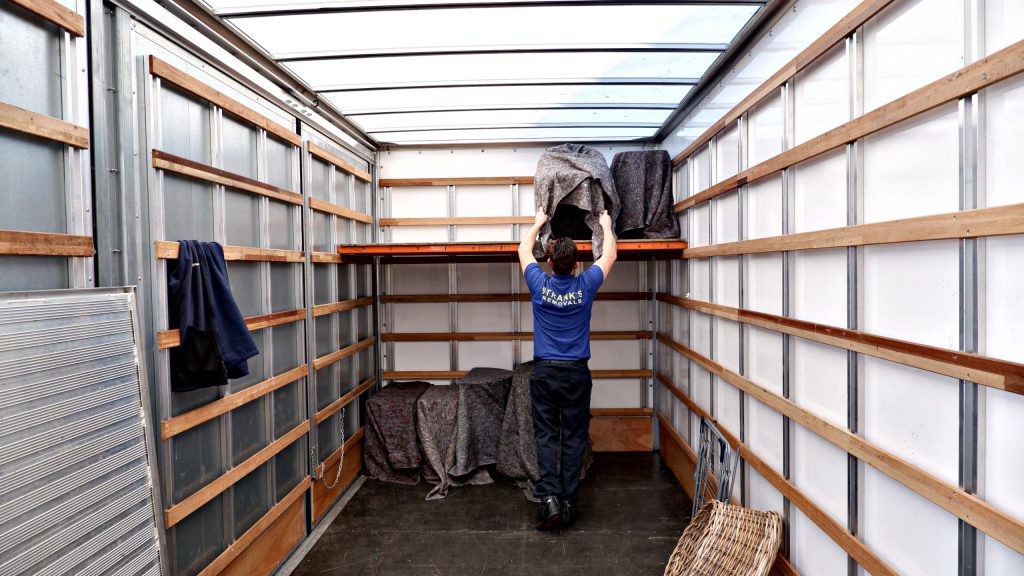
Furniture is wrapped in layers built for a long journey: furniture blankets first, then wrapping, then extra edge and corner protection for anything with a delicate finish. Fragile and high-value pieces such as mirrors, artwork and antiques get export-grade boxes or bespoke crating rather than standard cartons.
3. Packing and inventory
As we pack, we build a detailed, itemised inventory, numbering each item and noting values. This list is the single most important document in the whole move: a thorough one clears customs faster, and a vague one causes delays. We build it as we go rather than reconstructing it at the end.
4. Holding between stages
International moves do not always go straight from your door onto a departing vehicle. Completion dates slip, or a shared load waits to fill. Where that happens, your packed furniture is held securely at our depot until the freight leg is ready, so it is only handled when it needs to be. If you already know there will be a gap, tell us at the survey so it is planned in rather than added late.
5. Loading and departure
Once packing and paperwork are in order, the vehicle is loaded and sealed. For European moves, our Ashford base sits close to the Channel Tunnel and the Dover ferry, which keeps the UK leg efficient for destinations in France, Belgium, the Netherlands and beyond.
6. Handover to the freight partner
For the international shipping leg, we hand your consignment to an established freight partner. This is the honest shape of the service: you get a BAR-member firm handling the wrapping, packing and UK transport, and a specialist handling the sea, air or long-haul road shipping and the destination customs clearance. We manage the handover and keep you informed of departure and arrival windows.
7. Arrival, customs and delivery
At the destination, your shipment clears customs. With a complete inventory and the right paperwork in place, clearance is usually straightforward. Delays come from missing documents, prohibited items, or declared values that do not match the customs authority’s own view. Once cleared, the local crew delivers to the rooms you direct and reassembles anything dismantled for transport.
What Drives the Cost
We do not publish a price list, because a flat rate would be wrong for most moves. What we can do is be clear about what moves the price up or down, so there are no surprises:
- Volume. A few rooms cost less to move than a full house.
- Full load or part load. A dedicated vehicle for your goods alone costs more than sharing space on a part load, but it moves on your schedule.
- Destination and route. Distance, the border crossing, and whether the route is road via the Channel or sea freight all affect the price.
- How much packing you need. A full packing service costs more than packing some of it yourself, but it protects the items that are hardest to replace.
- Access at both ends. Stairs, no lift, narrow streets or a long carry add time and crew.
- Insurance cover level. The value you insure for affects the premium.
- Holding between stages. If your goods need to wait for a gap in dates, that is factored in.
- Specialist items. Pianos, antiques and anything needing bespoke crating are priced in.
The Paperwork, in Brief
Every international move needs customs paperwork: an itemised inventory, a customs declaration, proof that you are genuinely relocating, and, for EU moves, a transfer-of-residence relief claim so you do not pay duty on your own used belongings. The exact forms and conditions vary by country and change over time, so we cover them in detail in our companion guide on the paperwork behind a move to Europe. We are removers, not customs advisers, so always confirm the current position with your destination country’s customs authority, and we handle the clearance with our freight partner.
Common Mistakes to Avoid
- Leaving the paperwork late. Some destinations need original documents that take time to prepare. Start the paperwork alongside the physical preparation, not after it.
- Not declaring everything. An incomplete inventory creates discrepancies at customs. List everything, and remove anything you are not taking before loading day.
- Assuming home insurance covers the transit. Most contents policies exclude international transit. Arrange goods-in-transit cover through the mover or a specialist.
- Booking a part load without understanding the timing. Part loads are economical, but they leave when the load is full, not when you would prefer. If you need your furniture by a fixed date, a dedicated vehicle gives more control.
- Skipping the survey. Volume guessed without a proper look leads to the wrong vehicle or container. A pre-move survey is standard for any reputable BAR-member firm.
Ready to Move Furniture Abroad from Kent?
Stranks Removals & Storage handles European and international moves from our Ashford depot, close to the Channel Tunnel and Dover. We are a family firm, BAR members, BS EN 12522 certified, and rated 9.7 out of 10 across 380 verified reviews.
Get a quote for your move abroad or call the team on 0800 0195 525.
FAQ's
It depends on the destination, whether you book a full load or a part load, and whether the route is road via the Channel or sea freight. A dedicated full load moves on your schedule; a part load shares vehicle space and leaves once it is full, so it takes longer, and long-haul sea freight longer again. We give you a realistic timeline for your specific destination and load type at the survey, and we will not quote a transit time we cannot stand behind.
Both, in their part. On the UK side, our own team handles the survey, wrapping, packing, inventory, any holding, loading and transport. For the international shipping leg and destination customs clearance, we hand your consignment to an established freight partner. You get the accountability of a BAR-member firm on the UK side and a specialist on the shipping.
A full load is a vehicle or container dedicated to your goods alone, which moves on your timescale and suits a whole house. A part load shares space with other consignments heading the same way, which costs less but leaves when the space is full. We advise which fits your volume and dates at the survey.
In many countries the owner or an authorised representative needs to be available around delivery and customs clearance, but the rules vary by destination. We confirm what your destination country requires before the move.
Restricted and prohibited items vary by country, but common exclusions from a household shipment include firearms and ammunition, flammable liquids and aerosols, perishable food, and live plants, while some items made from protected species need special permits. We give you a prohibited-items list for your destination at the survey, and you should also check that country's official customs guidance.